AI & Dev Digest: OpenAI Alums Fund, Altman's Trust Issues, and the Rise of AI Agents
Today's AI digest covers OpenAI alums launching a new fund, concerns over CEO Sam Altman's trustworthiness, OpenAI's bold economic policy proposals, and the chaotic emergence of powerful AI agents like Claude and OpenClaw, challenging traditional developer tools.
Welcome to your daily dose of AI and software development insights! Today's headlines bring a whirlwind of activity, from former OpenAI talent shaping the future of venture capital to critical discussions about the leadership at OpenAI itself. Meanwhile, the practical application of AI is rapidly evolving, with powerful new AI agents causing both excitement and a touch of chaos in the tech world, forcing a re-evaluation of established development paradigms.
TL;DR
- OpenAI alums have launched Zero Shot, a new venture fund aiming for $100 million, already making early investments.
- Despite OpenAI's public policy push for AI benefiting humanity, internal and external skepticism over CEO Sam Altman's trustworthiness persists.
- OpenAI has proposed radical economic policies for an "intelligence age," including public wealth funds, robot taxes, and a four-day work week.
- The advent of powerful AI agents like Claude Cowork and OpenClaw is reshaping how we interact with technology, bringing both immense utility and potential chaos.
- Cursor's $2 billion bet suggests that AI agents are making traditional IDEs a secondary tool for developers, rather than the primary interface.
OpenAI Alums Launch New Venture Fund, Zero Shot, Aiming for $100 Million

A new venture capital fund named Zero Shot has successfully completed its first close, moving towards its ambitious $100 million funding goal. This fund is noteworthy for its strong connections to OpenAI, with several founding partners being former key figures from the AI research and deployment company. The fund has already begun making initial investments, signaling its active presence in the startup ecosystem.
The co-founding team includes Evan Morikawa, who was the former head of applied engineering at OpenAI during the launches of DALL·E, ChatGPT, and Codex. Also among the founders is Andrew Mayne, OpenAI's original prompt engineer and host of The OpenAI podcast, alongside Shawn Jain, an engineer and former researcher at OpenAI who also founded his own GenAI startup, Synthefy. These individuals are leveraging their deep expertise in AI to identify and support the next generation of innovative startups.
Zero Shot, a new venture fund with deep ties to OpenAI, has made its first close on its $100 million goal and has already begun investing, marking a significant development for the AI startup landscape.
Trust Issues Plague OpenAI: "The Problem Is Sam Altman," Say Insiders
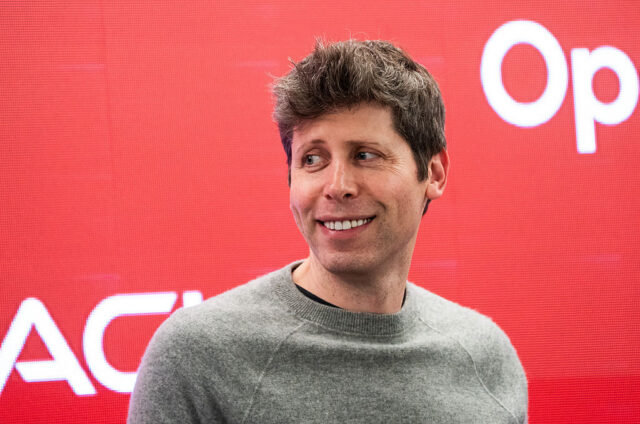
Despite OpenAI's recent release of policy recommendations advocating for AI to benefit humanity, a major investigation by The New Yorker casts a shadow of doubt over CEO Sam Altman's leadership and trustworthiness. The article, which involved interviews with over 100 individuals familiar with Altman's business practices and multiple interviews with Altman himself, presents a lengthy counterpoint to OpenAI's public-facing assurances.
OpenAI's policy document outlines a commitment to transparency and mitigating risks, including scenarios where AI systems might evade human control or undermine democracy, stressing that "people will be harmed" without proper safeguards. However, the coinciding New Yorker investigation highlights concerns from insiders regarding Altman's conduct, creating a disorienting juxtaposition between the company's stated ideals and perceived internal realities.
A comprehensive investigation reveals that many insiders question Sam Altman's trustworthiness, despite OpenAI's public push for AI policies designed to ensure human benefit.
OpenAI's Vision for the AI Economy: Public Wealth Funds, Robot Taxes, and a Four-Day Work Week

OpenAI has put forward a series of bold policy proposals designed to navigate the economic implications of superintelligent machines. These recommendations aim to reshape wealth distribution and work structures in what OpenAI terms the "intelligence age." The proposals merge concepts typically associated with left-leaning economic policies, such as public wealth funds and expanded social safety nets, with a foundational capitalist, market-driven framework.
These proposals come at a time of escalating public anxiety surrounding AI, fueled by concerns over potential job displacement, the concentration of wealth, and the rapid buildout of data centers. OpenAI's vision includes mechanisms like a "robot tax" and the widespread adoption of a four-day work week, suggesting a radical re-imagining of how society can manage and benefit from advanced AI.
OpenAI proposes a blend of public wealth funds, robot taxes, and a four-day work week to manage the economic changes brought by an "intelligence age."
Claude, OpenClaw, and the New Reality: AI Agents Unleash Chaos and Potential

The era of agentic AI has definitively arrived, bringing with it both unprecedented capabilities and new challenges. What began as simple interactions with chatbots like ChatGPT in 2022 has now evolved into a broader discussion about job security and the autonomous capabilities of machines. Powerful new autonomous agents such as Claude Cowork and OpenClaw are at the forefront of this shift, pushing the boundaries of what AI can accomplish.
OpenClaw, formerly known as Moltbot and Clawdbot, has quickly garnered over 150,000 GitHub stars and is being deployed locally with deep system access, performing tasks from inbox triaging to content curation. Google's Antigravity acts as a coding agent that accelerates development from prompt to production. Meanwhile, Anthropic's Claude Cowork has already caused significant market shifts, particularly in legal-tech and SaaS stocks, by automating tasks like contract review and NDA triage. These agents promise enhanced productivity but also highlight increased risks of misuse and the critical need for trust in providers.
The rapid rise of autonomous AI agents like OpenClaw and Claude Cowork signals a transformative, albeit chaotic, shift in technology, raising questions about trust and control as they gain system access and domain expertise.
Cursor's $2 Billion Bet: The IDE Is Now a Fallback, Not the Default

The landscape of software development tools is undergoing a profound transformation, spearheaded by the emergence of sophisticated AI agents. Cursor's recent $2 billion valuation underscores a significant industry shift: the traditional Integrated Development Environment (IDE) is increasingly becoming a secondary tool, rather than the primary interface for developers. This change is driven by AI agents that can generate, debug, and even deploy code, pushing the IDE into a fallback role.
This trend suggests that developers will interact with AI agents to perform complex coding tasks, leveraging the IDE primarily for validation, fine-tuning, or when direct human intervention is preferred for specific challenges. This redefines the workflow, making AI agents the default starting point for many development processes and signaling a new era where AI deeply integrates into every step of the software creation lifecycle.
Cursor's $2 billion valuation highlights a major industry shift where AI agents are making the IDE a fallback option, signaling a future where AI becomes the default starting point for development tasks.