Daily AI & Dev Digest: Torvalds Backs AI in Linux, Google Renames, Apple Expands in China, and Moonshot AI's Kimi 3 on the Horizon
Stay updated with today's top AI and software development news: Linus Torvalds' strong stance on AI in Linux, Google's rebranding of NotebookLM to Gemini Notebook, Apple Intelligence's expansion into China with Alibaba and Baidu, and the anticipated release of Moonshot AI's Kimi 3 model.
Welcome to your daily dose of AI and software development news! Today, we're diving into some significant developments, from the outspoken stance of a legendary developer on AI's role in open-source projects to major tech giants expanding their AI footprints and a Chinese AI firm poised to challenge leading models. It's a day of strong opinions, strategic rebranding, and global market expansion in the world of artificial intelligence.
TL;DR
- Linus Torvalds firmly supports using AI-powered coding tools in the Linux kernel, telling critics to 'fork it or walk away.'
- Google has renamed its AI-powered research product, NotebookLM, to Gemini Notebook, integrating it further into the Gemini ecosystem.
- Moonshot AI's upcoming Kimi 3 model is expected to rival or even surpass Anthropic's Opus 4.8, marking a significant leap for the Chinese AI firm.
- Apple Intelligence has received approval for launch in China, partnering with local tech giants Alibaba (Qwen AI) and Baidu for its AI services.
Linus Torvalds Takes a Firm Stand on AI in Linux: "Fork it. Or just walk away."
 Linus Torvalds, the revered creator and top-level maintainer of the Linux kernel, has unequivocally voiced his support for the integration of AI-powered coding tools within the project. In a strong statement made on the Linux kernel mailing list this week, Torvalds declared that Linux is not an "anti-AI project" and challenged critics to "fork it. Or just walk away" if they have issues with this direction.
This pronouncement emerged from a heated discussion surrounding Sashiko, an "agentic Linux kernel code review system." While Sashiko's creators claim it can independently find 53.6 percent of bugs that human coders would later fix, it also generates a "well within 20% range" of false positive bug reports. Torvalds' stance highlights his belief that AI is a valuable tool for improving the long-standing open-source project, despite concerns about its current imperfections.
Linus Torvalds is "willing to absolutely put my foot down" in support of using AI tools to improve the Linux kernel, emphasizing that "AI is a tool, just like other tools we use. And it's clearly a useful one."
His perspective is echoed by other key Linux maintainers like Greg Kroah-Hartman, who noted a significant improvement in AI-generated security reports, moving past the initial "AI slop" to provide genuinely useful feedback. Torvalds' unwavering support solidifies AI's role as an integral part of Linux development, making it clear that objections to its use will be "very loudly ignore[d]."
Google Renames NotebookLM to Gemini Notebook, Adds Coding Execution for Data Analysis
 Google continues its strategic rebranding efforts, integrating more of its AI products under the Gemini umbrella. The latest change sees its AI-powered research product, NotebookLM, officially renamed to Gemini Notebook. This move, following its initial reveal as Project Tailwind at Google IO in 2023, signifies a deeper alignment with Google's overarching Gemini ecosystem.
Since its inception, NotebookLM has garnered a substantial user base, reaching 30 million people and over 600,000 organizations. Over the past three years, Google has consistently enhanced the tool, adding capabilities such as interactive podcast generation, curated notebooks, video overviews, support for a wider array of file types, and even an enterprise plan. The latest update further boosts its utility by infusing coding execution for data analysis, making it a more interactive and powerful research assistant.
Google's renaming of NotebookLM to Gemini Notebook reflects its ongoing strategy to unify AI products under the Gemini brand, enhancing the tool with new features like coding execution for data analysis.
This rebranding and feature expansion also highlight the influence NotebookLM has had on the AI landscape, inspiring other companies and startups to develop similar capabilities in areas like podcast generation from source material and advanced research tools.
Moonshot AI's Kimi 3 Expected to Rival Anthropic's Opus 4.8
 Moonshot AI, a prominent Chinese AI lab, is poised to make a significant impact on the AI frontier model landscape with its upcoming Kimi K3 model. Anonymous sources cited by Financial Times suggest that Kimi K3 is expected to perform on par with, or even surpass, Anthropic's Opus 4.8. This potential breakthrough follows the positive reception of Moonshot's Kimi K2 models in the open-source AI market, which have already demonstrated capabilities close to leading frontier models.
The Kimi K3 model is anticipated to be the largest open-weight AI model from China, boasting a parameter count between 2 trillion and 3 trillion. Its release is expected "in the coming days," marking a crucial step for Moonshot AI in closing the performance gap with established closed-source models from giants like OpenAI and Anthropic.
Moonshot AI's forthcoming Kimi K3 model, with an estimated 2-3 trillion parameters, is anticipated to significantly challenge and potentially exceed the performance of Anthropic's Opus 4.8.
This news comes amidst a broader industry debate regarding the value of investing in expensive, closed-source AI models versus the rising capabilities of open-source alternatives. Moonshot AI is also reportedly in the process of raising fresh capital, which would value the company at $31.5 billion, a substantial increase from its $20 billion valuation in May after a $2 billion funding round.
Apple Intelligence Approved for Launch in China with Alibaba and Baidu Partnerships
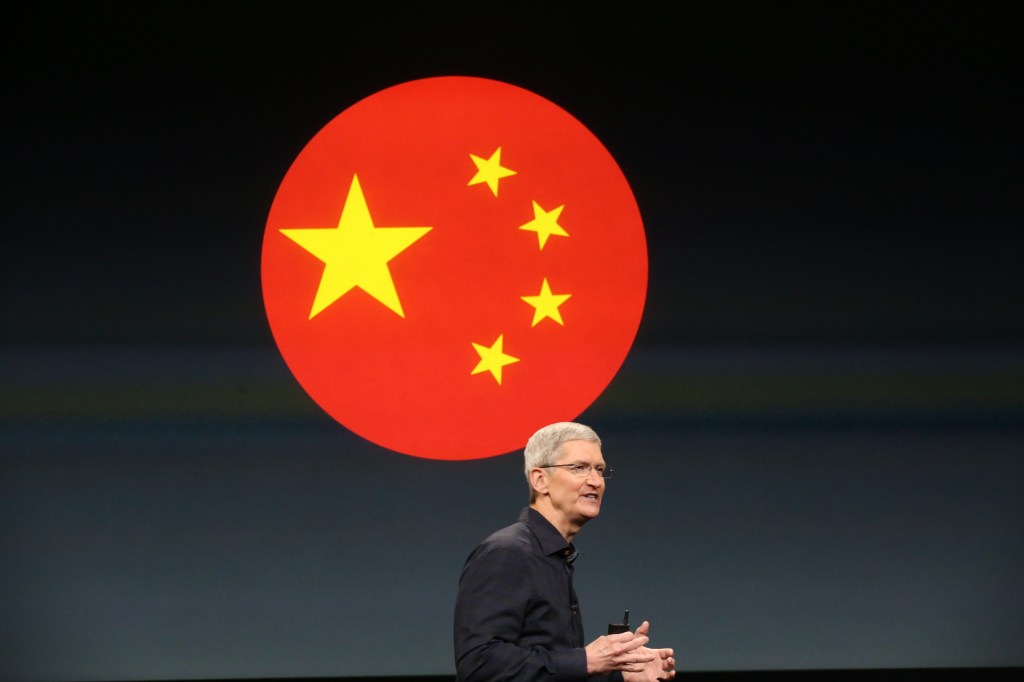 Apple Intelligence, Apple's generative AI offering, has received crucial approval for launch in China, marking a significant expansion into a key market. China's Cyberspace Administration of China, the country's internet content regulator, approved Apple's AI services following partnerships with local tech giants Alibaba and Baidu.
The deal with Alibaba involves integrating its Qwen AI model into Apple's operating systems, including iOS, iPadOS, macOS, and visionOS. This partnership, which was previously rumored, is a vital step for Apple's AI ambitions. Additionally, a Baidu spokesperson confirmed to TechCrunch that it is also collaborating with Apple to develop Apple Intelligence features specifically for Chinese users.
Apple Intelligence is expanding into China with regulatory approval, powered by strategic partnerships with Alibaba's Qwen AI and Baidu to deliver its generative AI services to Chinese users.
China represents a substantial market for Apple, with Greater China generating $20.5 billion in sales in the second quarter, an increase of 28% year-over-year. The company recently regained its No. 2 position in China's smartphone market, partly due to discounts offered during a recent shopping festival. These AI partnerships are expected to further solidify Apple's presence and competitive edge in the region.