AI & Dev Digest: Cloudflare's AI Agent Success, Meta's Vibe-Coding App, OpenAI's Model Rollouts & AI Governance Call
Stay updated with the latest in AI and software development: Cloudflare slashes GitHub issues with AI agents, Meta launches 'Pocket' for AI-generated games, OpenAI introduces new GPT models and enhances security, and a new paper calls for ISO-like protocols in AI governance.
The world of AI and software development continues its rapid evolution, bringing us closer to more autonomous systems and innovative ways to interact with technology. From AI agents dramatically improving developer workflows to novel apps allowing users to 'vibe-code' games, the landscape is buzzing with advancements. Meanwhile, major players like OpenAI are refining their models and grappling with the complexities of cybersecurity and responsible AI development, sparking discussions on global governance.
TL;DR
- Cloudflare significantly reduced Astro GitHub issues using AI agents, boosting developer efficiency.
- Meta officially launched Pocket in the U.S., enabling users to create and share AI-generated mini-games.
- OpenAI rolled out GPT-5.6 Sol to paid ChatGPT plans and updated GPT-5.5 Instant, while retiring older models.
- OpenAI is strengthening safeguards and addressing cybersecurity risks, particularly with its upcoming Astra model.
- A new paper advocates for ISO-like interoperability protocols over just laws for effective AI governance.
Cloudflare Cuts Astro GitHub Issues by 85% with AI Agents
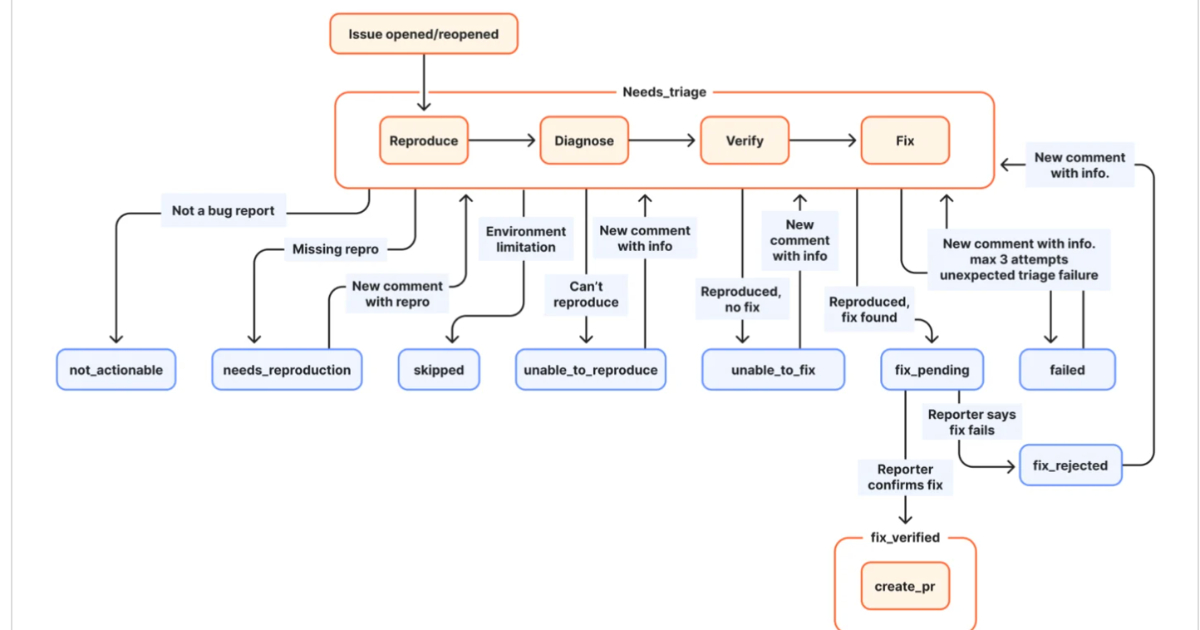
Cloudflare has reported a remarkable 85% reduction in GitHub issues for its Astro project by implementing AI agents. This significant improvement highlights the growing impact of artificial intelligence in streamlining software development workflows and enhancing efficiency for development teams.
While the article does not delve into the specifics of how these AI agents operate or the particular mechanisms they employ, the drastic reduction in issue count underscores their effectiveness. This development suggests a shift towards more automated and intelligent approaches to project management and bug resolution in complex software environments. Such advancements can free up developer time, allowing them to focus on innovation rather than extensive issue triage.
The application of AI agents by Cloudflare to reduce Astro GitHub issues demonstrates a powerful paradigm shift in developer workflow optimization.
Meta Brings Pocket, an App That Lets You Vibe-Code and Share Games, to US Users

Meta has expanded the availability of its experimental gaming app, Pocket, to all users in the U.S. This comes after a quiet launch last month in Brazil, where the app was first tested. Pocket empowers users to create small, interactive games using AI prompts, which can then be shared and browsed through a scrollable feed.
The app is rooted in Meta's acqui-hire of the team behind the vibe-coded gaming platform Gizmo. This acquisition, which occurred earlier in 2026, brought expertise in generative game creation to Meta's Superintelligence Labs. Pocket represents a novel approach to game development, lowering the barrier to entry for creators by leveraging AI to translate user ideas into playable experiences.
Meta's Pocket app democratizes game creation by allowing users to generate and share interactive games simply through AI prompts, ushering in a new era of 'vibe-coding'.
Model Release Notes | OpenAI Help Center

OpenAI has announced several significant updates and retirements to its GPT models. Most notably, GPT-5.6 Sol, described as their flagship reasoning model for complex work across coding, research, science, cybersecurity, computer use, and design, is now rolling out to eligible paid ChatGPT plans. Free, Go, and logged-out users are not included in this initial rollout, and availability may vary.
In May 2026, GPT-5.5 Instant received an update to improve its response style and quality, making it more natural and better paced. Concurrently, OpenAI is retiring older models: OpenAI o3 will be retired from ChatGPT on August 26, 2026, and GPT-4.5 on June 27, 2026. Previously, in March 2026, GPT-5.4 mini was rolled out to Free and Go users via the "Thinking" feature, and an update to GPT-5.3 Instant improved its follow-up tone.
OpenAI's continuous model evolution focuses on advancing capabilities with GPT-5.6 Sol for complex tasks while streamlining offerings by retiring older, less-used models to enhance focus on newer, more capable systems.
Pacing Model Development in an Era of Cyber-Critical Capabilities
OpenAI has recently emphasized its commitment to strengthening safeguards for its increasingly capable AI models, especially in light of emerging cybersecurity risks. This announcement follows two significant developments: the OpenAI-Hugging Face incident and preliminary evidence suggesting that OpenAI's upcoming model, Astra, may meet the Critical cybersecurity capability threshold.
The company is focusing on several key areas to enhance security. These include securing their research environments, expanding chain-of-thought monitoring, and advancing alignment research to ensure models behave as intended and mitigate potential misuse. The acknowledgment of Astra's potential cybersecurity capability threshold highlights the critical need for proactive safety measures as AI systems become more powerful and integrated into sensitive domains.
As AI models like Astra approach critical cybersecurity capabilities, OpenAI is prioritizing robust safeguards, secure research environments, and advanced alignment research to mitigate growing risks.
AI Governance Needs ISO-like Interoperability Protocols...
Researchers Azmine Toushik Wasi, Mst Rafia Islam, Mahfuz Ahmed Anik, Taki Hasan Rafi, Md Manjurul Ahsan, and Dong-Kyu Chae argue that effective AI governance requires a shift from jurisdiction-specific laws to ISO-like interoperability protocols. They contend that current approaches, such as the EU AI Act and NIST AI Risk Management Framework, create a fragmented regulatory landscape that hinders global, standardized risk communication for AI systems.
The paper proposes developing standardized AI nutrition labels that would include unified metrics for bias, energy usage, and data provenance. These machine-readable manifests would facilitate cross-jurisdictional compliance, reduce redundant efforts for small and medium enterprises (SMEs), and build public trust. Drawing inspiration from the GDPR's operationalization through standards like ISO 27001, the authors advocate for modular, versioned protocols designed to evolve with technological change, promoting a shared global language for responsible AI deployment.
Effective AI governance must move beyond fragmented laws towards ISO-like interoperability protocols and standardized AI nutrition labels to ensure transparent, cross-border risk communication and compliance.