AI's Double-Edged Sword: Wealth Divide, Near-Death IPOs, and macOS Breaches
Today's AI news reveals a stark contrast: a widening wealth gap among tech workers, the incredible comeback story of chip darling Cerebras, and the surprising role of AI in exposing macOS vulnerabilities. Plus, discover new tools to manage your Mac's digital life.
The world of AI and software development continues its dizzying pace, bringing both immense opportunity and significant challenges. From a critical look at the tech industry's growing wealth disparity to a miraculous turnaround for an AI chip giant and even AI-assisted breaches of macOS, the landscape is constantly shifting. We also explore new tools designed to help you navigate this complex digital environment.
TL;DR
- A new report highlights a widening wealth divide in the AI boom, with a select 10,000 individuals achieving significant wealth while many others face job insecurity and a "deep malaise."
- Cerebras Systems, now a $60 billion public company, nearly failed in 2019, burning $8 million a month trying to solve a crucial technical problem.
- This week's Installer column introduces essential Mac utilities to clean up your computer and manage your digital life more effectively.
- Osaurus is an open-source, Apple-only LLM server that allows Mac users to seamlessly switch between local and cloud AI models.
- Security researchers, with the aid of Anthropic's Claude Mythos Preview, claim to have successfully breached macOS, demonstrating AI's potential in identifying system vulnerabilities.
The Haves and Have-Nots of the AI Gold Rush
 The current AI boom, while creating immense wealth, is also fostering significant inequality and anxiety within the tech industry. According to Menlo Ventures partner Deedy Das, San Francisco is experiencing a "frenetic" atmosphere where the "divide in outcomes is the worst I've ever seen." Das estimates that approximately 10,000 individuals—founders and employees at companies like OpenAI, Anthropic, and Nvidia—have reached "retirement wealth of well above $20M." In contrast, many others, including those with well-paying jobs (but less than $500k), worry about never achieving similar financial milestones.
Adding to this sentiment, widespread layoffs are occurring, and many software engineers feel their core skills are becoming obsolete. This situation leads to confusion about career paths and a "deep malaise about work (and its future)." The commentary on X reflects this tension, with some users pointing out the fortunate position of those expressing concern, while others highlight the paradox that AI is both a "lottery ticket" and a threat to job security.
The same technology is both the lottery ticket & the thing eating your fallback.
$60B AI Chip Darling Cerebras Almost Died Early On, Burning $8M a Month
 Cerebras Systems, now a publicly traded company valued at approximately $60 billion, faced a near-death experience in 2019, just three years after its founding. The company, which sells AI chips for inference to major players like OpenAI and AWS, was burning through an astonishing $8 million a month while attempting to solve a technical problem considered nearly impossible by the semiconductor industry.
Founder CEO Andrew Feldman recounted spending nearly $200 million on this singular technical challenge. Despite repeated failures reported to the board, Feldman pressed on, understanding that without a solution, the company's fate was sealed. Cerebras was founded on the radical idea of turning an entire silicon wafer into one giant, powerful AI chip, believing this approach would outperform the traditional method of stringing together multiple smaller chips. This bold vision eventually paid off, leading to a blockbuster IPO and solidifying the co-founders as billionaires.
We were spending about $8 million a month. At this point, we had incinerated nearly $200 million trying to solve one technical problem.
The App You Need to Clean Up Your Computer
 This week's Installer column from David Pierce at The Verge highlights essential utilities for keeping your computer clean and organized, with a particular focus on Mac users. The column, Installer No. 128, serves as a guide to the most useful and "Verge-iest" tools available. While specific app names are not detailed in this summary, the focus is on practical solutions for digital hygiene.
Beyond computer clean-up, the Installer also touches on a range of other tech and cultural topics that David Pierce has been engaging with, including reading about David Attenborough and screenwriters training AI, listening to Productivity FM's mixes, exploring personal software like the Poppy AI assistant, and tracking steps with the new Fitbit Air. The column also mentions a new book in a favorite series and a tool for managing the fediverse, providing a broad look at current digital interests.
The best part of Installer is your ideas and tips.
Osaurus Brings Both Local and Cloud AI Models to Your Mac
 As AI models become increasingly commoditized, startups are actively developing the software layers that facilitate their use. Among these is Osaurus, an open-source, Apple-only LLM server designed to empower Mac users with flexibility in deploying AI models. Osaurus allows users to switch between various local AI models or connect to cloud providers like OpenAI and Anthropic, all while keeping their files and tools securely on their own hardware.
Osaurus evolved from the concept of Dinoki, a desktop AI companion. Co-founder Terence Pae, a former software engineer at Tesla and Netflix, realized that users were reluctant to pay for AI tokens even after purchasing an app. This insight led him to focus on running AI locally. Pae envisioned Osaurus as a personal AI that could interact with a user's Mac, accessing files, browsing, and system configurations. The project was built publicly, iteratively adding features and addressing bugs, and now offers seamless integration with both local and cloud AI solutions.
You can do pretty much everything on your Mac locally, like browsing your files, accessing your browser, accessing your system configurations. I figured this would be a great way to position Osaurus as a personal AI for individuals.
Security Researchers, Aided By Anthropic's Mythos, Claim To Have Breached macOS
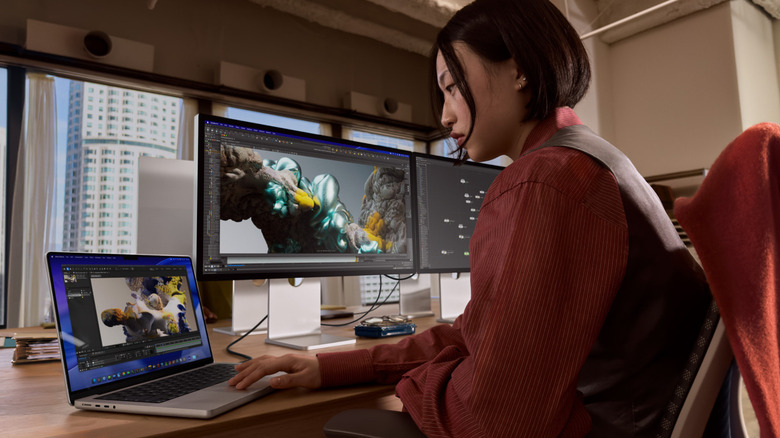 In a significant development for cybersecurity, researchers from Palo Alto-based company Calif claim to have successfully breached macOS, a system known for its robust security. Their breakthrough was achieved with the assistance of Anthropic's Claude Mythos Preview, an AI designed to prevent cyberattacks. The exploit, a privilege escalation vulnerability on M5 silicon, could allow an attacker to gain control over a Mac computer by accessing otherwise inaccessible parts of the system.
The researchers collaborated with Mythos Preview to identify vulnerabilities that belonged to known classes, with the AI quickly pinpointing bugs. While human expertise was still crucial for designing the exploit, this demonstrates the advanced capabilities of AI systems in unearthing security flaws and potential attack paths. Apple is taking these findings seriously, confirming to The Wall Street Journal that "Security is our top priority, and we take reports of potential vulnerabilities very seriously." The full technical details are being withheld until Apple implements fixes. Anthropic utilizes Mythos Preview in its Project Glasswing initiative, aimed at preventing AI cyberattacks through AI, with participants including Amazon Web Services, Cisco, Google, Microsoft, and NVIDIA.
Security is our top priority, and we take reports of potential vulnerabilities very seriously.