Daily AI & Tech Digest: Android's AI Overhaul, OpenAI's Cybersecurity Push, and Nvidia's Software Moat
Catch up on the latest tech news for May 13, 2026: Google's AI-driven Android updates, OpenAI's Daybreak cybersecurity initiative, and how Nvidia's CUDA solidifies its software dominance.
The tech world is buzzing with significant advancements, particularly in artificial intelligence and its integration across platforms. Today's digest highlights Google's ambitious plans to infuse Android with powerful Gemini Intelligence features, OpenAI's strategic move into cybersecurity with Daybreak, and a compelling argument for Nvidia's true competitive edge lying in its software, CUDA. These developments signal a future where AI not only automates tasks but also plays a crucial role in digital defense and foundational computing.
TL;DR
- Google is rolling out a massive AI overhaul for Android in 2026, powered by Gemini Intelligence, focusing on cross-app automation and enhanced web browsing.
- Google's new Gemini Intelligence features for Android include agentic AI for multi-step tasks across apps and "vibe-coded" widgets, enhancing personalization and automation.
- OpenAI has launched Daybreak, a cybersecurity initiative utilizing GPT-5.5 models and Codex Security to proactively detect and fix vulnerabilities, directly competing with Anthropic's Claude Mythos.
- OpenAI's Daybreak initiative aims to combat cyber threats by combining GPT-5.5-Cyber and Codex Security to find and patch vulnerabilities before attackers exploit them, challenging Anthropic's Claude Mythos.
- Nvidia's CUDA platform is highlighted as the company's most significant "moat," proving Nvidia's dominance as a software company due to its unparalleled parallelization capabilities in high-performance computing and AI.
Android is getting a big AI overhaul in 2026 - Ars Technica
 Google is preparing a substantial AI overhaul for Android in 2026, with many features falling under the Gemini Intelligence banner. This initiative, which Google has preemptively announced ahead of its I/O conference, aims to bring more automation and customization to smartphones. Key enhancements include expanded app automation, a feature that began testing earlier in 2026 with apps like DoorDash and Uber on Pixel and Samsung devices. While initial testing reportedly faced frustrations, Google asserts it has since refined the system.
The updated automation capabilities promise to handle more complex, multi-app tasks. For instance, Android's AI could theoretically identify a course syllabus within Gmail and then seamlessly transition to a shopping app to add necessary books to a cart. Another example provided suggests taking a picture of a travel brochure and instructing Gemini to book a similar trip via the Expedia app. These capabilities are intended to reduce busy work, though their effectiveness will depend on the specific apps supported, which currently seem limited primarily to food, grocery, and ride-hailing services. Additionally, the Gemini-powered Auto Browse feature, already available on desktop Chrome, is set to launch on Android by the end of June for devices running Android 12 or higher, leveraging cloud-based Gemini models to parse webpages.
Google's extensive AI integration under Gemini Intelligence aims to automate complex, multi-app tasks on Android, promising to reduce busy work and enhance user experience.
Google brings agentic AI and vibe-coded widgets to Android - TechCrunch
 Further details on Google's expansive AI plans for Android were revealed at its "Android Show: I/O Edition" event. The company showcased new Gemini Intelligence-branded features, emphasizing agentic AI capabilities. This includes the AI's ability to complete tasks across multiple applications, browse the web efficiently, fill out forms, and even dictate speech. A particularly novel addition is the introduction of "vibe-coded" widgets, allowing for greater personalization of the Android interface.
These enhanced Gemini capabilities build upon earlier introductions, such as food ordering and ride booking, first seen at the Samsung Galaxy S26 launch. Now, Google's AI assistant can manage multi-step processes like copying a grocery list from one app and adding items to a shopping cart in another. Users will initiate these complex tasks by pressing the phone's power button and verbally describing the task, with on-screen content providing context for the AI. Google has assured users that Gemini will require final confirmation before completing sensitive actions like checking out. The web browsing feature, previously introduced in January, also allows Gemini to book appointments and perform other web-based tasks.
Google's latest Gemini Intelligence updates empower Android with agentic AI, enabling multi-step task completion across apps and introducing personalized "vibe-coded" widgets.
Daybreak Is OpenAI's Response To Anthropic's Claude Mythos - Engadget
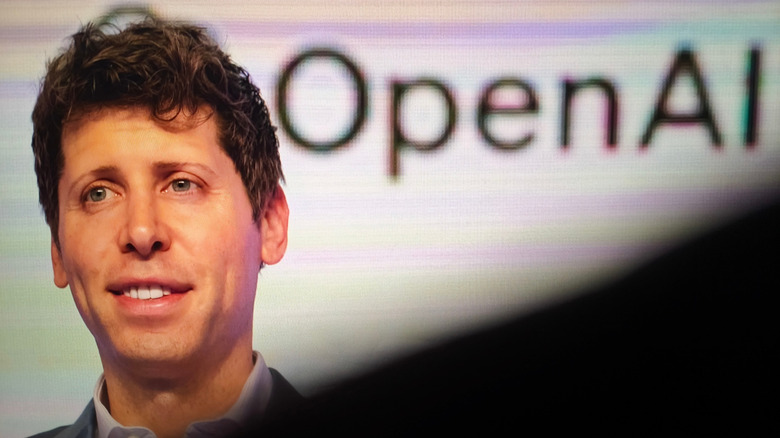 OpenAI has officially launched Daybreak, a new cybersecurity initiative designed to compete directly with Anthropic's Project Glasswing. Project Glasswing, powered by Anthropic's Claude Mythos Preview AI model, has shown promise in cyber defense, notably helping Mozilla identify and patch 271 vulnerabilities in Firefox in April. OpenAI's Daybreak leverages its suite of AI models, including the specialized security agent Codex.
Daybreak is founded on the principle that cyber defense should be integrated into software development from the outset, rather than solely focusing on reactive vulnerability fixes. The initiative aims to significantly reduce analysis time from hours to minutes for high-impact issues, generate and test patches within repositories, and provide clients with audit-ready evidence. For example, OpenAI demonstrated Codex Security scanning a codebase, validating high-risk findings, and applying fixes. Daybreak will utilize GPT-5.5 for general purposes, GPT-5.5 with Trusted Access for Cyber for most defensive security workflows (like secure code review and malware analysis), and GPT-5.5-Cyber for specialized tasks such as authorized red teaming and penetration testing. OpenAI is already collaborating with industry partners including Cloudflare, Cisco, CloudStrike, Palo Alto Networks, Oracle, and Akamai.
OpenAI's Daybreak initiative aims to revolutionize cybersecurity by building defensive capabilities into software development from the start, using advanced GPT-5.5 models and Codex Security to proactively identify and mitigate vulnerabilities.
OpenAI just released its answer to Claude Mythos - The Verge
 OpenAI has introduced Daybreak, its new AI initiative designed to detect and patch software vulnerabilities proactively, thereby serving as a direct competitor to Anthropic's Claude Mythos. Daybreak integrates the Codex Security AI agent, which launched in March, to create threat models from an organization’s code, pinpoint potential attack vectors, validate vulnerabilities, and automate the detection of high-risk issues.
This launch follows just over a month after Anthropic unveiled Claude Mythos as part of its Project Glasswing initiative, which was described as too sensitive for public release and only privately shared. However, Claude Mythos reportedly experienced unauthorized access. OpenAI, which previously lacked a direct security product, emphasizes that Daybreak is a collaborative effort, combining "the most capable OpenAI models, Codex, and our security partners." The initiative also incorporates specialized cyber models like GPT-5.5 with Trusted Access for Cyber and GPT-5.5-Cyber, which began rolling out last week. OpenAI is actively working with both industry and government partners to further develop and deploy increasingly capable cyber models.
OpenAI's Daybreak leverages a combination of GPT-5.5-Cyber and Codex Security to preemptively identify and resolve software vulnerabilities, marking its robust entry into the cybersecurity AI space against competitors like Anthropic's Claude Mythos.
CUDA Proves Nvidia Is a Software Company - WIRED
 Nvidia's true competitive advantage, often referred to as its "moat," is not its renowned hardware, but rather its Compute Unified Device Architecture (CUDA). While Nvidia is widely recognized as a chip company, CEO Jensen Huang considers CUDA his most precious "treasure." CUDA, pronounced "KOO-duh," is a platform that allows software developers to use Nvidia GPUs for general-purpose processing, extending far beyond their original graphical rendering capabilities.
The core strength of CUDA lies in its ability to facilitate parallelization. A simple example illustrates this: a single-core computer executes 81 operations for a 9x9 multiplication table sequentially. In contrast, a GPU with nine cores can assign each core a different column, achieving a ninefold speed gain. Modern GPUs can further optimize by recognizing commutativity (7x9 = 9x7), reducing operations from 81 to 45, nearly halving the workload. This optimization is critical, especially when a single AI training run can cost a hundred million dollars. The development of CUDA was spearheaded by Ian Buck, a Stanford PhD student and former gamer, who recognized the potential of GPUs for high-performance computing in the early 2000s. He went on to lead CUDA's development at Nvidia, transforming the company's trajectory and solidifying its position as a software powerhouse in the AI era.
Nvidia's most formidable competitive advantage, or "moat," is its CUDA platform, which enables unparalleled parallel processing on GPUs and firmly establishes Nvidia as a dominant force in software, not just hardware.