AI's Latest Leap: From Image App Dominance to Enterprise Ventures & Medical Breakthroughs
Discover how AI image models are now outpacing chatbots in app growth, the strategic joint ventures by Anthropic and OpenAI, and groundbreaking medical diagnostic capabilities demonstrated by AI in recent news.
The AI landscape is rapidly evolving, demonstrating surprising shifts in user adoption and strategic industry movements. Today's news highlights a pivot towards visual AI's impact on app downloads, major players forging new enterprise partnerships, and even AI's superior diagnostic capabilities in critical medical scenarios.
TL;DR
- Image AI models are now the primary driver for AI mobile app growth, significantly outperforming chatbot model upgrades.
- Anthropic and OpenAI are both launching significant joint ventures to expand their enterprise AI service offerings.
- Tether AI is developing a "Stable Intelligence layer" designed for efficient, scalable AI on edge devices, aiming to democratize access.
- Nicolas Sauvage of TDK Ventures made an early, successful bet on Groq, an AI chip startup focused on inference, proving his "boring parts of AI" investment philosophy.
- A Harvard Medical School study revealed that OpenAI's AI models delivered more accurate diagnoses than emergency room doctors in a real-world setting.
Image AI models now drive app growth, beating chatbot upgrades

New data from app intelligence provider Appfigures indicates a significant shift in the mobile AI app market: image model releases are now the primary catalyst for growth. These visual AI updates are generating 6.5 times more downloads than traditional chatbot model upgrades. This trend marks a departure from earlier periods where new conversational model releases, like those powering ChatGPT and Gemini, or features such as voice chat interfaces, drove the most demand.
For instance, both ChatGPT and Google's Gemini experienced substantial download surges following the introduction of their respective image models. Specifically, Google's Gemini saw an additional 22+ million downloads within 28 days after the launch of its image model, Nano Banana, last August. This underscores the increasing user demand for and engagement with AI capabilities that involve image generation and processing within mobile applications.
Image model releases are generating 6.5 times more downloads than traditional model updates for AI mobile apps.
Anthropic and OpenAI are both launching joint ventures for enterprise AI services

In a strategic move to capture the burgeoning enterprise AI market, both Anthropic and OpenAI are establishing new joint ventures focused on deploying AI services for businesses. On Monday, Anthropic publicly announced its venture, partnering with major financial firms including Blackstone, Hellman & Friedman, and Goldman Sachs. Other significant investors include Apollo Global Management, General Atlantic, GIC, Leonard Green, and Sequoia Capital. The Wall Street Journal reported this new venture is valued at $1.5 billion, with initial commitments of $300 million each from Anthropic, Blackstone, and Hellman & Friedman.
This announcement from Anthropic comes just as its primary competitor, OpenAI, is reportedly preparing a similar initiative. These parallel efforts highlight a clear industry trend: as AI models become more sophisticated, the focus is shifting towards their practical application and integration within enterprise environments. Both companies are aiming to provide tailored AI solutions, leveraging the expertise and resources of their new partners to meet the specific needs of large organizations.
Anthropic and OpenAI are both launching joint ventures valued at $1.5 billion to deploy enterprise AI services, signifying a major industry pivot towards business integration.
Tether AI is building the Stable Intelligence layer, a highly efficient platform designed to scale on edge devices, made for the people

Tether AI is developing what it calls the "Stable Intelligence layer," an efficient platform engineered to scale AI capabilities directly on edge devices. This initiative aims to address the current challenges enterprises face in integrating and fine-tuning AI models, which often involve significant costs for compute resources and reliance on centralized cloud data centers. According to Paolo Ardoino, CEO of Tether, their QVAC SDK and Fabric tools empower users and companies to perform inference and fine-tune powerful models on their own hardware, maintaining full control over their data.
The company posits that while institutional AI integration is growing and intelligent applications are boosting productivity, the cost-efficiency of AI remains questionable, especially for Small to Midsize companies. These businesses incur additional expenses to fine-tune or utilize pre-tuned AI models, on top of regular fees. Tether AI seeks to democratize access to advanced AI by moving computation to the edge, thereby reducing the dependency on expensive cloud infrastructure and making AI more accessible and cost-effective for a broader range of users and organizations.
"QVAC SDK and Fabric give people and companies the ability to execute inference and fine-tune powerful models on their own terms, on their own hardware, with full control of their data." - Paolo Ardoino, CEO, Tether.
Nicolas Sauvage is betting on the boring parts of AI

Nicolas Sauvage, founder of TDK Ventures, manages $500 million across four funds and champions the theory that the best investments often take four years to become obvious. This philosophy was notably validated by his early investment in Groq, an AI chip startup now valued at $6.9 billion after its most recent funding round. In 2020, well before the generative AI boom, Sauvage invested in Groq, which was founded by Jonathan Ross, an engineer who previously helped build Google's Tensor Processing Units.
Groq has consistently focused on inference—the computationally intensive process of generating responses from AI models. Ross designed his chip by first building the compiler, creating an architecture that Sauvage described as so lean that "you can't remove one part and have it still work." While some might have seen this as a niche focus, Sauvage recognized the asymmetric demand for inference. Unlike consumer hardware, which has a natural ceiling, the demand for inference continues to compound with every new AI application and model, proving his foresight into the underlying infrastructure crucial for AI's explosive growth.
Nicolas Sauvage's early investment in Groq, a company focused on AI inference, demonstrates the long-term value in betting on the fundamental, often 'boring' components of technological advancement.
In Harvard study, AI offered more accurate diagnoses than emergency room doctors
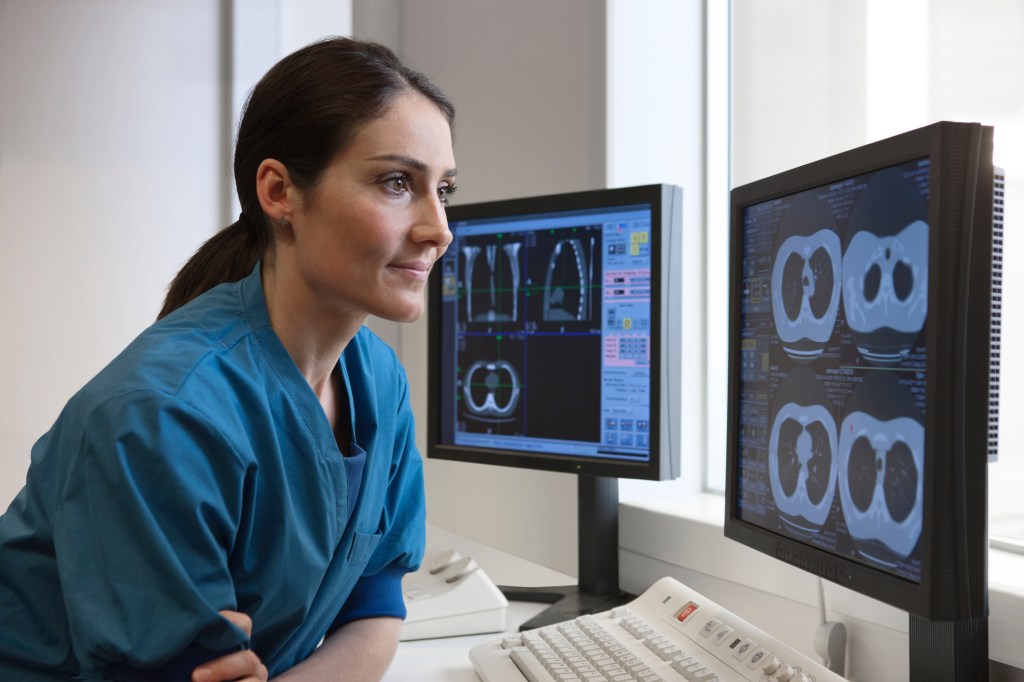
A groundbreaking study published in Science by a research team from Harvard Medical School and Beth Israel Deaconess Medical Center has demonstrated that large language models can outperform human doctors in diagnosing medical conditions, particularly in emergency room settings. The researchers conducted experiments comparing the diagnostic abilities of OpenAI's o1 and 4o models against two attending physicians for 76 emergency room patients.
The study found that o1 performed either nominally better than or on par with both attending physicians and 4o at each diagnostic touchpoint. The differences were especially pronounced during the initial ER triage, where information is minimal and quick, accurate decisions are critical. The researchers emphasized that the data was not pre-processed, meaning the AI models were presented with raw patient information, similar to a real-world scenario. This suggests a significant potential for AI to enhance diagnostic accuracy, especially in high-pressure medical environments.
"At each diagnostic touchpoint, o1 either performed nominally better than or on par with the two attending physicians and 4o." - Harvard Medical School study on AI diagnostics.