Daily AI & Dev Digest: Hyperagents, Gemini for Mac, Adobe's Creative AI, and App Store Hurdles
Catch up on the latest in AI and development: Meta's self-improving 'hyperagents,' Google's native Gemini app for Mac, Adobe's cross-app Firefly AI Assistant, Gizmo's growth, and the challenges faced by 'vibe coding' app Anything on the App Store.
Welcome to your daily dose of AI and software development news! Today, we're diving into groundbreaking AI advancements from Meta and Google, significant shifts in creative workflows with Adobe, and the latest on app development platforms, including a notable funding round and a controversial App Store saga.
TL;DR
- Meta researchers unveiled 'hyperagents,' a new class of AI that continuously rewrites and optimizes its own problem-solving logic for non-coding tasks.
- AI learning app Gizmo has achieved 13 million users and secured a $22 million Series A investment.
- Google has finally launched a native Gemini app for Mac, bringing its AI assistant directly to the desktop.
- Adobe introduced the Firefly AI Assistant, a chat-based interface that orchestrates complex, multi-modal projects across Creative Cloud applications.
- 'Vibe coding' app Anything is rebuilding after being removed from the App Store twice due to Apple's stance on such applications.
Meta Researchers Introduce 'Hyperagents' to Unlock Self-Improving AI for Non-Coding Tasks

Meta researchers, in collaboration with several universities, have announced the development of "hyperagents"—a novel self-improving AI system designed to overcome the limitations of current AI in dynamic, non-coding environments. Unlike existing systems that rely on fixed, human-crafted improvement mechanisms, hyperagents continuously rewrite and optimize their own problem-solving logic and underlying code. This allows them to self-improve across diverse domains like robotics and document review, autonomously inventing capabilities such as persistent memory and automated performance tracking.
The core challenge with current self-improving AI is its dependency on a static "meta agent" that human engineers must manually update. This creates a "maintenance wall," tying system improvement directly to the speed of human iteration. Hyperagents, however, aim to be "fully self-referential," meaning they can analyze, evaluate, and rewrite any part of themselves, breaking free from initial structural constraints and enabling self-accelerating progress. This approach promises highly adaptable agents that build reusable decision machinery, reducing the need for constant manual prompt engineering.
Hyperagents learn to improve the self-improving cycle itself, accelerating progress and compounding capabilities over time with less human intervention.
AI Learning App Gizmo Levels Up with 13M Users and a $22M Investment

Gizmo, an AI-powered learning platform launched in 2021, has reported impressive growth, attracting over 13 million users across more than 120 countries. This marks a significant increase from the 300,000 users it had in 2023, demonstrating strong user adoption for its service, which transforms students’ notes into interactive study materials.
In conjunction with its expanding user base, Gizmo has successfully secured $22 million in Series A funding. This investment will be strategically allocated to bolster the company's engineering and AI teams. Additionally, Gizmo plans to expand its presence specifically within the U.S. college market, aiming to further integrate its innovative learning tools into higher education.
Gizmo's rapid user growth and substantial $22 million Series A funding underscore the increasing demand for AI-powered, interactive learning solutions.
Google Rolls Out a Native Gemini App for Mac

Google has officially introduced a native Gemini app for Mac, aligning its offerings with rivals such as OpenAI and Anthropic, which already provide similar desktop applications. This new app allows users to access Gemini from anywhere on their Mac with a quick shortcut (Option + Space), eliminating the need to switch tabs for instant assistance.
According to Google's blog post, the Gemini app for Mac is designed to seamlessly integrate into workflows, whether users are drafting market reports, verifying dates, or building budgets in spreadsheets. A key feature is the ability to share anything on the screen with Gemini, including local files, to receive immediate help or summaries. For example, a user can ask for the three biggest takeaways from a complex chart, or generate images and videos using the app.
Google's new native Gemini app for Mac aims to provide instant, context-aware AI assistance across all desktop tasks without interrupting user workflow.
Adobe Takes Creative Cloud into Claude Code-esque Territory
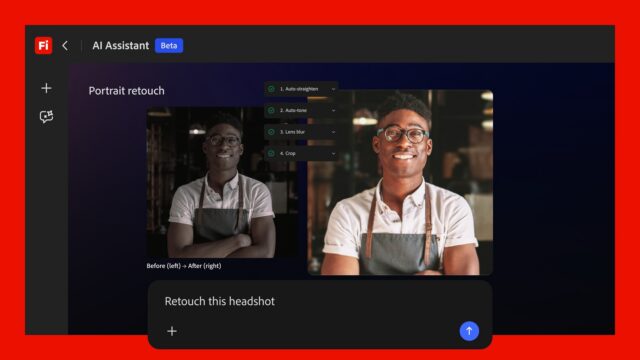
Adobe is making a significant strategic shift with the introduction of its Firefly AI Assistant, a chat-based interface that promises to handle complex, multi-modal projects across various Creative Cloud applications. While Adobe has previously integrated task-specific AI tools into apps like Photoshop and Illustrator, this new assistant goes further by orchestrating entire workflows, akin to a "Claude Code for creative apps."
The Firefly AI Assistant aims to serve two primary purposes: to provide experienced creatives with an efficient way to offload mundane tasks spanning multiple applications, and to lower the "barrier to entry" for less experienced users. It will check in with users for suggestions and clarifications mid-task, allowing for real-time adjustments. This marks an evolution from prior chat-based prompts within individual apps, signaling Adobe's move towards a more integrated and intelligent creative workflow.
Adobe's Firefly AI Assistant represents a significant pivot towards an agentic AI model, orchestrating complex creative projects across multiple Creative Cloud applications to enhance efficiency and accessibility.
How Vibe Coding App Anything Is Rebuilding After Getting Booted From the App Store Twice

The 'vibe coding' app Anything is facing significant challenges, having been removed from the App Store twice by Apple. This reflects Apple's increasingly stringent stance on 'vibe coding' applications, which has also seen updates paused for other apps like Replit and Vibecode. Anything's co-founder, Dhruv Amin, confirmed that the app was initially removed on March 26 and has struggled to gain re-approval, despite a brief reinstatement.
In response to these setbacks, Anything is now exploring alternative avenues to serve its users, particularly those who build iOS apps. The company is pivoting towards offering a desktop version of its service. This strategic shift aims to circumvent the strict App Store guidelines and continue enabling users to develop mobile applications, highlighting the complexities and hurdles faced by developers in the competitive app ecosystem.
The recurring removal of 'vibe coding' app Anything from the App Store underscores Apple's tightening grip on app policy and is prompting developers to explore alternative distribution strategies like desktop versions.