AI & Dev Daily Digest: Faster AI Image Gen, Keyboard Agents, and EU Job Shifts
Stay updated with the latest in AI and software development: Google's new faster image generator, Acti and OpenClaw bringing AI agents to mobile keyboards, OpenAI's Codex hardware, and a deep dive into AI's impact on Europe's job market.
Welcome to your daily dose of AI and software development insights! Today's headlines bring news of significant advancements in AI, from more accessible image generation to deeply integrated AI agents on our mobile devices. We'll also explore new hardware for developers and a crucial report on how AI is poised to reshape the European job landscape.
TL;DR
- Google launched Nano Banana 2 Lite, a significantly faster and cheaper AI image and video generator.
- Acti introduced an agentic keyboard for iOS and Android, integrating AI actions directly into smartphone typing.
- OpenClaw released standalone iOS and Android apps, bringing agentic AI assistants to mobile marketplaces.
- OpenAI teased new hardware, a macro pad developed with Work Louder, specifically for its Codex coding tool.
- OpenAI Economic Research published a report mapping the potential impact of AI on the EU workforce, identifying four job transition archetypes.
Google introduces a faster, cheaper image generator with Nano Banana 2 Lite
 Google has unveiled Nano Banana 2 Lite, the latest iteration of its in-house AI video and image generator. This new version is touted by the company as being substantially faster and more economical than its predecessor.
The model boasts significantly reduced latency, capable of producing images in just four seconds. This speed positions it as an ideal tool for users requiring rapid iteration and high-volume image production, such as during workshops or content drafting. Furthermore, the cost-effectiveness is notable, priced at just $0.034 per 1,000 images, making it an affordable solution for creators looking to scale their content efforts.
Google's Nano Banana 2 Lite democratizes high-volume AI image generation with its speed and affordability, enabling rapid content creation and iteration.
Acti puts AI agents directly into your smartphone keyboard
 Acti, a Singapore-based startup, has launched an innovative agentic keyboard for both iOS and Android devices. This new keyboard goes beyond typical word suggestions, integrating AI agents directly into the typing experience to perform actions on behalf of the user.
The core idea behind Acti is to eliminate the constant app-switching users endure when seeking AI assistance. According to Acti founder and CEO Young Wang, this keyboard brings AI tools directly into frequently used applications such as email, messaging, and social media. This allows users to leverage AI capabilities without leaving their current context, streamlining workflows and enhancing productivity.
Acti is transforming mobile interaction by embedding AI agents directly into the smartphone keyboard, allowing users to perform AI-powered actions without ever leaving their current app.
There's Now An OpenClaw App For iOS And Android Phones
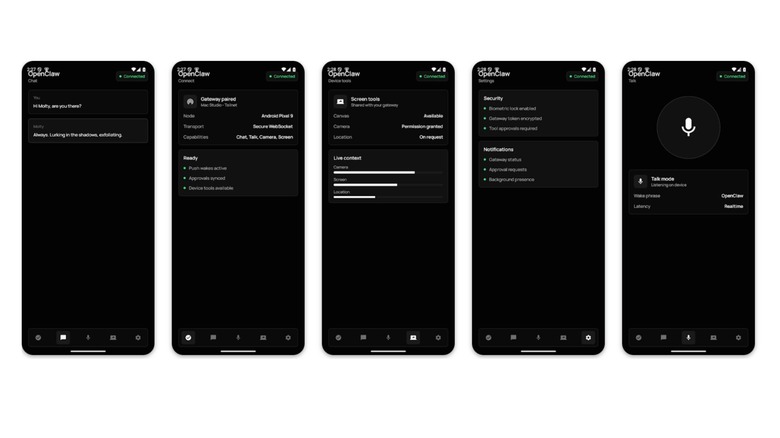 OpenClaw, an open-source project, has officially released standalone applications for iOS and Android smartphones. This move marks the arrival of agentic AI directly onto the App Store and Play Store, offering users a new way to interact with AI assistants on their mobile devices.
Users of the new OpenClaw apps can now chat with the AI assistant and grant it access to various device components, including the camera, screen, location, photos, contacts, calendar, and reminders. The project gained significant traction after its founder, Peter Steinberger, joined OpenAI earlier this year, with OpenAI providing unspecified support to the OpenClaw Foundation, which now publishes the apps. This development is particularly noteworthy given Apple's historically stringent review process for agentic AI tools due to security concerns.
The launch of OpenClaw's iOS and Android apps signifies a major step in bringing powerful, agentic AI directly to smartphone users, despite prior regulatory hurdles.
OpenAI is teasing new hardware… for Codex
 OpenAI has hinted at new hardware development, specifically a device tailored for its AI-powered coding tool, Codex. A video posted to X on Monday showcased a square-shaped device featuring several buttons, accompanied by the caption: “Your favorite Codex shortcuts are getting an upgrade.” The launch is slated for July 15th.
This new device is a collaboration with Work Louder, a company known for its mechanical keyboards and macro pads that allow for mappable keys, dials, and switches. While it's not the much-anticipated AI device OpenAI is reportedly developing with former Apple designer Jony Ive, the silhouette of the new hardware bears a resemblance to Work Louder's Creator Micro 2 macro pad. This suggests the device will offer customizable shortcuts and actions, similar to how Figma previously partnered with Work Louder for a macro pad with preconfigured shortcuts.
OpenAI's upcoming hardware collaboration with Work Louder will enhance developer productivity by providing a dedicated physical interface for Codex shortcuts and actions.
Mapping Europe’s AI Workforce Opportunity
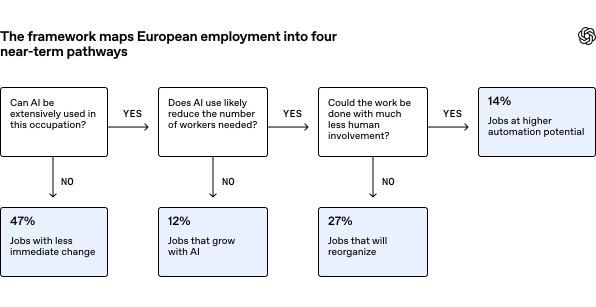 OpenAI Economic Research has released a new report, "The AI Jobs Transition Framework for the EU," which extends its previous framework for the United States to the European labor market. The report addresses critical questions about AI's labor market impact, its geographic and temporal effects, and how to ensure a beneficial transition for all.
Utilizing the official European Skills, Competences, Qualifications and Occupations (ESCO) taxonomy and Eurostat employment data, the study examines how AI capabilities might lead to near-term occupational changes across EU member states. A key finding is that, when compared to the U.S., the EU has a smaller proportion of employment in occupations with higher near-term automation potential. The framework categorizes occupations into four archetypes: those that may grow with AI, those with higher automation potential, those likely to reorganize, and those facing less immediate change. These categories serve as a planning map to anticipate where adjustment pressures and opportunities may arise.
OpenAI's new report provides a crucial "planning map" for the EU, detailing how AI will reshape the workforce by identifying specific job archetypes and regions susceptible to varied impacts, highlighting that jobs don't transition as easily as AI capabilities cross borders.